
Table of Contents
- Is a Whole House Surge Protector Worth It? The Honest Answer
- What Does a Whole-House Surge Protector Protect?
- Whole-Home Surge Protector vs. Power Bar: What’s the Difference?
- Whole-House Surge Protector Installation Cost: What to Expect
- Whole-House Surge Protector Lifespan and Maintenance
- Ratings, Warranties, and What to Look For
- Conclusion: Making the Call for Your Home
- Frequently Asked Questions
Last Updated: October 12, 2026
Is a Whole House Surge Protector Worth It? The Honest Answer
For most homeowners, a whole house surge protector is worth it. It is a one-time installation that guards your electrical system against voltage spikes that can destroy appliances, computers, and HVAC equipment.
Here is the math that matters. A single board-level failure in a furnace or refrigerator can cost more to repair than the protection device itself. Multiply that across every sensitive electronic device in your home and the case builds fast.
This guide from Bighorn Electric breaks down what these devices protect, how long they last, and where they fall short. We install and service electrical panels across the East Kootenays.
The short version: if your home has modern electronics, a heat pump, or a home office, the answer is almost always yes.
A whole house surge protector costs far less than replacing one major appliance. The real question is not whether you need protection, but how many layers you need.
What Does a Whole-House Surge Protector Protect?
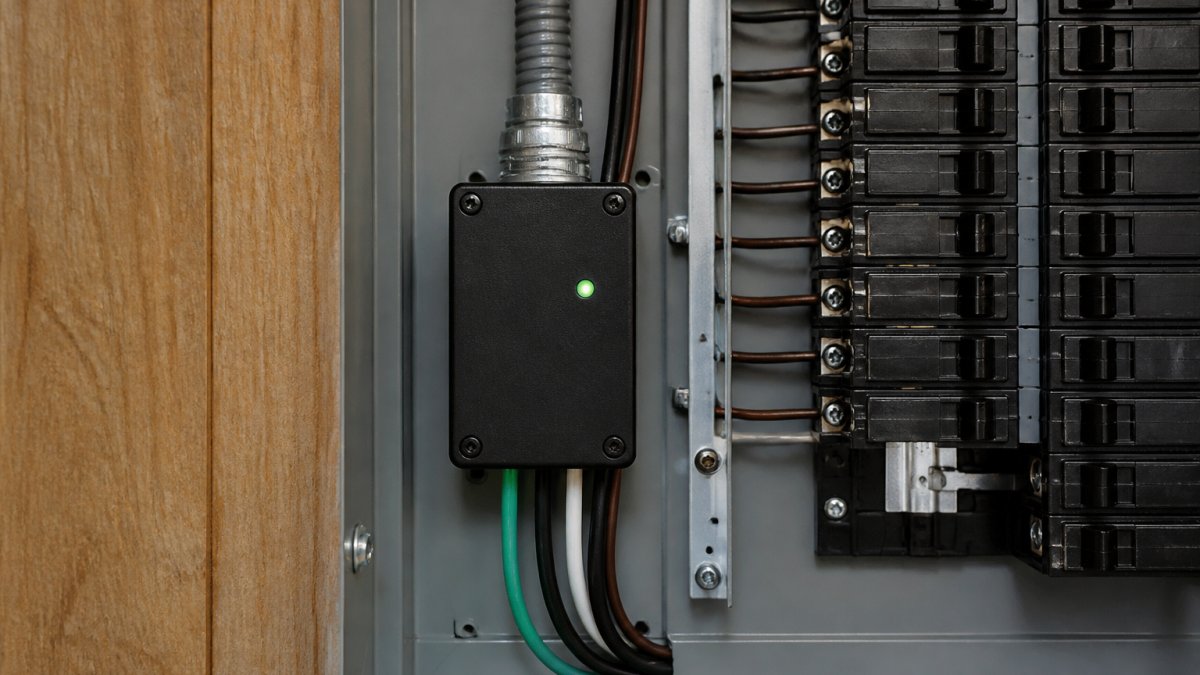
A whole-house surge protector shields every hardwired and plugged-in device in your home by clamping excess voltage at the electrical panel before it travels through the wiring.
A whole-house surge protector is a device installed at your electrical panel that redirects excess voltage from power surges safely to ground, protecting your home’s wiring and connected equipment.
It sits between your utility power feed and your home’s circuits. When a voltage spike arrives, the device diverts it to ground in milliseconds.
Appliances and Systems Covered
The list of protected equipment is longer than most people expect:
- HVAC system and heat pumps, including control boards and compressors
- Computers, routers, and home office gear
- Televisions and home entertainment systems
- Smart-home devices, thermostats, and security panels
- Kitchen appliances: refrigerators, ovens, microwaves, dishwashers
- Laundry equipment: washers and dryers with electronic controls
- Well pumps and irrigation controllers
- Garage door openers and their circuit boards
What It Cannot Protect
A panel-mounted device has limits. It will not stop a direct lightning strike from damaging your home, and it does not protect low-voltage lines like phone, cable, or fiber. Those need separate point-of-use protection. Devices plugged into a standard power strip with no surge rating get no benefit at all.
Whole-Home Surge Protector vs. Power Bar: What’s the Difference?
A power bar protects only what is plugged into it. A whole-home surge protector guards every circuit in the house, including hardwired equipment a power bar can never reach.
Here is the trade-off in plain terms:
| Feature | Whole-Home Surge Protector | Power Bar |
|---|---|---|
| Coverage | Entire electrical system | One outlet only |
| Protects hardwired HVAC | Yes | No |
| Protects well pumps | Yes | No |
| Response time | Fast, at the panel | Fast, at the outlet |
| Typical placement | Electrical panel | Living room, office |
| Best for | Whole-house defense | Individual devices |
The thing nobody tells you about power bars is that most cheap ones wear out silently. The protection fades after a few surges and the bar keeps working as a plain extension cord. You get no warning.
That is why we recommend layered protection. Use a whole-home device at the panel as your first line, then add point-of-use protection for your most expensive electronics.
Whole-House Surge Protector Installation Cost: What to Expect
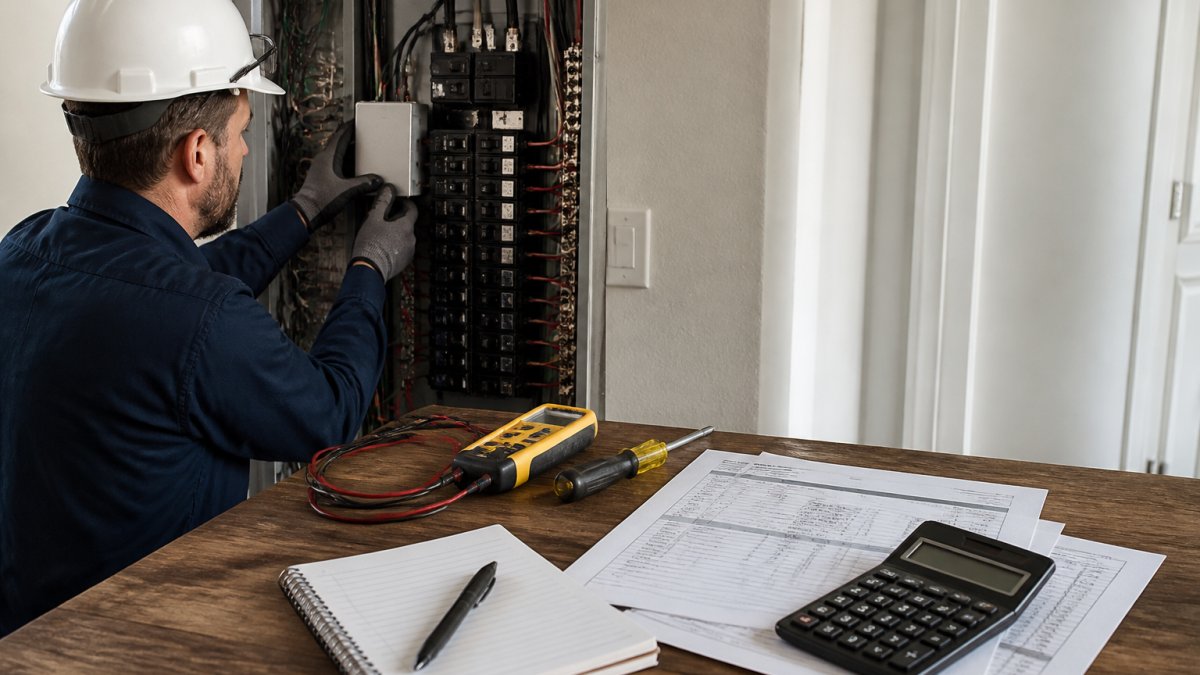
Whole-house surge protector installation depends on your panel type, the device you choose, and whether your service panel needs an upgrade to fit it.
What Drives the Price
- Panel compatibility: some service panels have open breaker slots, others do not. A panel with no spare space may need a tandem breaker or a subpanel before the device can be added.
- Service upgrade needs: an older panel, a fuse box, or a panel already at its rated capacity may need work before a device can be added. That is the single biggest variable.
- Device type: Type 1, Type 2, and Type 3 units carry different ratings and different price points. A Type 1 unit at the service entrance is usually the most expensive; a Type 3 point-of-use unit is the least.
- Labor access: a finished basement, a tight crawlspace, or a panel mounted in a closet adds time.
- Permits and inspection: required in most jurisdictions, and the fee is set locally.
A Realistic Cost-Benefit Picture
Instead of a single national number, think in terms of what the protection is being compared against. The catch is that avoided damage is uncertain, not guaranteed. You are buying a reduction in risk, not an insurance policy that pays out on every event.
A useful way to frame it:
- Low-exposure home: newer panel, stable feed, few high-value electronics. The payback is slow and the case is weaker.
- Moderate-exposure home: heat pump, home office, smart appliances, some history of flickering or brownouts. The math usually favors protection.
- High-exposure home: rural feed, overhead lines, frequent lightning, well pump, or a home business with servers. Protection is close to a no-brainer, and layered protection is worth the extra cost.
For an accurate figure, book a panel assessment. You get a clear scope before any work starts.
Do not buy a device before confirming your panel can accept it. A unit that does not fit your service panel means a return, a delay, and a second electrician visit.
Compare the installed cost against the replacement value of your most expensive hardwired equipment, not against a power bar. If the device costs less than one control board, the risk reduction is usually worth it.
Whole-House Surge Protector Lifespan and Maintenance
A whole-house surge protector lasts about 5 to 10 years under normal conditions, but its lifespan depends on how many surges it absorbs.
Every surge wears the device down a little. A home near a substation or in an area with frequent lightning sees faster wear than one on a stable feed.
Most quality units have a status indicator light. Green means it is still protecting. When the light goes out, the device has reached the end of its life and needs replacing.
Check that light twice a year. It takes ten seconds and tells you whether your protection is still active.
Write the install date on the panel with a marker. When you check the status light, you will know how old the unit is and whether it is near the end of its rated life.
Ratings, Warranties, and What to Look For
The two specs that matter most are joule rating and response time, but they only make sense together with clamping voltage and the device type. A high joule rating with a slow response time still lets a spike through; a fast response time with a low joule rating fails early in a big event.
Look for these on any unit you consider:
- Joule rating: higher is better for homes with many electronics, but treat it as a measure of total energy absorbed over the device’s life, not a per-surge guarantee.
- Response time: measured in nanoseconds; lower is better.
- Clamping voltage: the level at which the device starts diverting excess voltage. Lower clamping voltage means less voltage reaches your equipment.
- Type rating: Type 1 mounts at the service entrance, Type 2 at the panel, Type 3 at the outlet. Type 1 and Type 2 are the panel-level options; Type 3 is point-of-use.
- Status indicator: shows whether protection is still active. This is the spec most homeowners actually use day to day.
What the Device Does Not Protect Against
This is the part most articles skip. A panel-mounted device does not protect low-voltage lines such as phone, cable, fiber, or Ethernet. It does not stop a direct lightning strike from damaging your home. It does not protect equipment on a circuit that is not properly grounded and bonded. And it does not protect against every surge, a large enough event can exceed the device’s capacity, which is exactly why layered protection matters.
Warranties and Insurance: Read the Fine Print
Manufacturer warranties on surge devices vary widely. Some cover the device only. Others cover connected equipment up to a stated cap, but usually only if you registered the product, used a licensed installer, and followed the install rules. Keep your receipt and registration confirmation.
On the insurance side, many homeowners policies treat surge damage as a covered peril under the contents or dwelling portion, subject to your deductible and policy terms. Whether a specific event is covered depends on the cause and your wording, so the practical step is to document the damage, keep the failed device, and ask your insurer before assuming either way. A device warranty and an insurance claim are separate paths; one does not replace the other.
Photograph your panel after installation, including the device label and the install date. If you ever file a warranty or insurance claim, that photo is the fastest proof of what was installed and when.
Conclusion: Making the Call for Your Home
Surge damage is one of those problems that stays invisible until it costs you a furnace board or a dead refrigerator. A whole house surge protector turns that risk into a fixed, one-time cost.
If your home has a heat pump, a home office, or a full set of smart appliances, the protection pays for itself the first time a spike hits. If you are unsure whether your panel can take one, that is exactly the kind of question we answer every day.
At Bighorn Electric, our licensed, insured, and bonded electricians handle panel assessments, surge protector installation, and full electrical service for homes and businesses. We back our work with a 48-hour on-site response guarantee for urgent issues and clear communication on every ETA.
Book online with Bighorn Electric and get a clear quote before any work begins.
Frequently Asked Questions
Is a whole-house surge protector worth the cost?
It depends on what you have plugged in and how often your area sees voltage spikes. A whole-house surge protector is a single device at the electrical panel that diverts excess voltage from utility switching, internal surges, and nearby lightning strikes before it reaches your wiring. If you have a heat pump, a home office, or smart-home devices, the cost of one repair often exceeds the installed price of the unit. For a rental or a home with minimal electronics, a point-of-use power bar may be enough.
How much does whole-house surge protector installation cost?
Pricing depends on your panel type, available breaker space, wiring distance, and whether a service upgrade is needed. A straightforward install on a modern panel costs less than one that requires a subpanel or new grounding work. Because every home is different, Bighorn Electric provides a quote after assessing your service panel. Book online to get a fixed assessment rather than guessing from a generic range.
Does a whole-house surge protector protect every appliance?
No. It protects equipment connected to your home’s electrical system, including HVAC systems, computers, televisions, and major appliances. It does not protect low-voltage lines such as phone, cable, or ethernet, and it will not stop a direct lightning strike from causing damage. For full coverage, pair it with point-of-use protection on sensitive electronics and surge-rated coax or data line protectors.
How long does a whole-house surge protector last?
Most units have a device lifespan of five to ten years, though a single large surge can shorten that significantly. Many models include a status indicator light that shows when the protective component has been depleted. Check it after any major storm or power outage. If the light is out, the unit needs replacing even if it still passes power to your home.

0 Comments