

Table of Contents
- Why Electrical Safety Standards Matter in Petroleum Facilities
- Hazardous Area Classification for Oil and Gas Facilities
- Electrical Equipment for Hazardous Locations
- Oil and Gas Electrical Safety Procedures
- Petroleum Facility Electrical Inspection Checklist
- Applicable Codes and Standards for Petroleum Electrical Systems
- Common Electrical Hazards and Prevention Strategies
- Lifecycle Implementation: From Design to Ongoing Maintenance
- Frequently Asked Questions
Last Updated: October 14, 2026
Why Electrical Safety Standards Matter in Petroleum Facilities
Electrical safety standards for petroleum facilities exist because failure is catastrophic: a single spark in a vapor-saturated environment can trigger an explosion that destroys infrastructure, injures workers, and halts operations for months.
Refineries, processing facilities, and fuel storage installations operate with flammable gases, combustible vapors, and explosive atmospheres present during normal operations.
Regulatory compliance isn’t optional. According to Canadian Centre for Occupational Health and Safety guidelines on hazardous work environments, electrical systems in classified hazardous areas must meet specific design and installation requirements.
This guide covers the framework for electrical safety standards for petroleum facilities: hazardous area classification, equipment requirements by zone, installation methods, inspection protocols, and lifetime compliance.
Hazardous Area Classification for Oil and Gas Facilities
Hazardous area classification is the foundation of electrical safety in petroleum facilities. It defines which equipment is safe in each location and which ignition sources must be eliminated.
Division and Zone Classification Methods
Hazardous area classification divides petroleum facilities into zones based on the likelihood and duration of explosive atmospheres. Canada’s system is based on IEC 60079 standards, which align with the Canadian Electrical Code (CEC).
Canada uses two approaches: the Division system (Division 1 and 2) and the Zone system (Zone 0, 1, and 2). Both assess frequency, duration, and likelihood of explosive atmospheres, but organize them differently.
Classification depends on the flammable substance, ventilation, proximity to release sources, and facility design.
How Classification Affects Equipment Selection
Classification determines which equipment can be installed. Equipment rated for Division 1 or Zone 1 can be used in Division 2 or Zone 2 areas, but never the reverse.
Selection hinges on the hazard group and temperature class of the substance present. Petroleum vapors are typically Group IIC or IIB with temperature class T4 or T5, so equipment must prevent surface temperatures from exceeding the vapors’ ignition temperature.
Classification also dictates wiring methods, conduit types, and connections. Division 1 areas may require sealed conduit, specific cable glands, and explosion-proof enclosures; Division 2 areas have less stringent requirements, but compliance is still mandatory.
Electrical Equipment for Hazardous Locations
Selecting equipment for hazardous locations is where theory meets practice: it must be rated for the classified area, installed correctly, and maintained to keep functioning safely.
Explosion-Protected and Intrinsically Safe Equipment
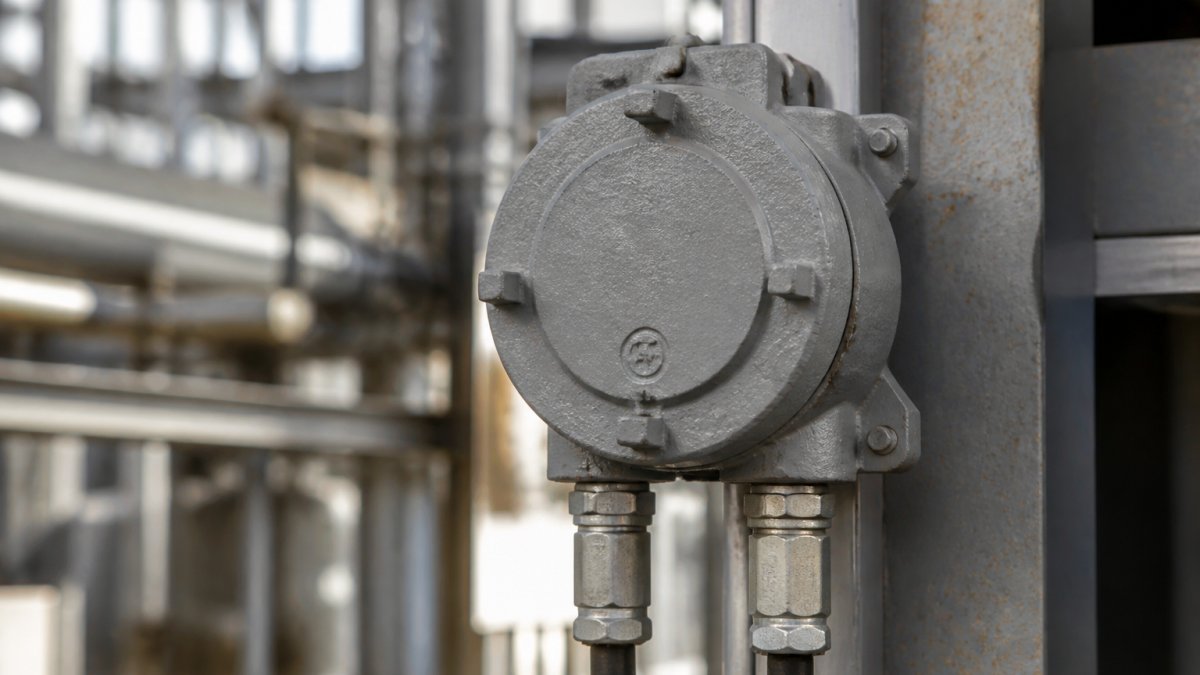
Intrinsically safe equipment limits electrical energy to levels that cannot ignite explosive atmospheres, using low voltage, low current, and components that prevent sparks and high temperatures.
Facilities typically use both: motor starters, contactors, and heavy-duty switches are often explosion-proof, while instrumentation, sensors, and monitoring equipment are frequently intrinsically safe.
Equipment must be marked with its certification: hazard group (e.g., IIC, IIB), temperature class (e.g., T4, T5), and certifying standards (e.g., CSA, IEC 60079).
Wiring Methods and Control Systems
Wiring methods are restricted to prevent flammable vapor accumulation inside conduit or cable trays.
Control systems must fail safely: if a circuit loses power, the system should shut down or move to a safe state rather than keep operating. This applies to pump motors, compressors, heaters, and any equipment that could become an ignition source.
Grounding and bonding are critical: all conductive equipment must be grounded to prevent static buildup, and bonding jumpers connect frames, conduit, and cable trays for a continuous conductive path.
Oil and Gas Electrical Safety Procedures
Standards are only as good as the people implementing them. Electrical safety procedures ensure workers understand the hazards, work safely in classified areas, and follow consistent practices that prevent incidents.
Worker Training and Competence Requirements
Workers who install, maintain, or work near electrical equipment in petroleum facilities must receive training specific to hazardous areas. According to Workplace Hazardous Materials Information System (WHMIS) guidelines, workers must understand the properties of flammable substances present in their work area and the consequences of exposure.
Competence varies by role: electricians must understand CEC requirements, IEC 60079 standards, and petroleum-specific hazards; maintenance technicians must inspect equipment, identify defects, and perform safe repairs; operators must understand equipment limits and hazard-reporting procedures.
A technician who doesn’t understand why equipment is required in a specific location is more likely to make substitutions that compromise safety.
Ignition Source Control and Monitoring
Ignition source control means identifying every potential spark, heat, or electrical discharge in a classified area and eliminating or controlling it, including static electricity, friction, and mechanical impacts, not just electrical equipment.
Continuous monitoring provides early warning of failures: temperature sensors on motors and transformers detect overheating, insulation resistance testing identifies wiring degradation before faults, and vibration monitoring catches mechanical problems on rotating equipment.
Documenting monitoring results is essential: records prove compliance and reveal trends that indicate developing problems. Many facilities use automated systems that log data continuously and alert staff to deviations.
Petroleum Facility Electrical Inspection Checklist
Inspection and testing verify that electrical systems are installed correctly and keep operating safely; a systematic approach ensures nothing is overlooked.
Inspection Intervals and Testing Procedures
Electrical inspections follow scheduled intervals based on equipment type, operating conditions, and regulatory requirements. New installations must be inspected before energizing; existing systems should be inspected at least annually, more often for critical or high-risk equipment.
The Canadian Electrical Code and CSA standards specify testing methods and acceptance criteria. Thermographic surveys identify overloaded circuits or poor connections before failure, and megohm testing of motor windings detects moisture intrusion or insulation breakdown.
| Inspection Type | Frequency | Purpose | Documentation |
|---|---|---|---|
| Visual inspection | Monthly | Identify obvious defects, corrosion, loose connections | Inspection log |
| Thermographic survey | Annually | Detect overheating in connections and equipment | Thermal images with analysis |
| Insulation resistance testing | Annually | Verify winding insulation integrity in motors | Test results and trends |
| Ground continuity testing | Annually | Confirm bonding and grounding effectiveness | Resistance measurements |
| Pressure relief testing | Per manufacturer | Verify explosion-proof enclosure integrity | Test certificates |
Documentation and Compliance Records
Documentation is the evidence that your facility meets electrical safety standards. Records should include equipment specifications, installation records, inspection and testing results, maintenance performed, and any incidents or near-misses.
Each piece of equipment should have a file with nameplate data, certification documents, installation records, and maintenance history.
Retain inspection and testing reports for the equipment’s life plus a reasonable period afterward. If an incident occurs, they demonstrate compliance, and they provide a baseline for comparison if future testing shows changes in equipment condition.
Applicable Codes and Standards for Petroleum Electrical Systems
Multiple codes and standards apply to petroleum electrical systems. Understanding which apply in your jurisdiction and how they interact is essential for compliance.
Canadian Electrical Code and CSA Standards
The Canadian Electrical Code (CEC) is Canada’s primary standard for electrical installations, incorporating international standards including IEC 60079 for hazardous areas. It specifies installation methods, equipment ratings, grounding and bonding requirements, and inspection procedures for classified areas.
CSA (Canadian Standards Association) publishes standards that align with and supplement the CEC. CSA C22.1 forms the basis of the CEC, and CSA hazardous-area standards cover marking, testing, and certification of explosion-protected and intrinsically safe equipment.
Facilities must comply with the CEC as adopted in their province or territory.
IEC 60079 and Industry-Specific Requirements
IEC 60079 is the international standard for electrical apparatus in explosive atmospheres, covering hazardous area classification, equipment design and testing, installation, operation, and maintenance. The CEC aligns closely with it, so CEC compliance generally ensures IEC 60079 compliance.
IEC 61010 covers safety requirements for measurement, control, and laboratory equipment, applying to instrumentation and control equipment in petroleum facilities. Equipment used in classified areas must be certified to IEC 61010 as well as IEC 60079.
Industry-specific requirements may also apply: some operators have internal standards exceeding minimum code requirements, and multinationals often require compliance across multiple jurisdictions.
Common Electrical Hazards and Prevention Strategies
Electrical hazards in petroleum facilities extend beyond shock and arc flash: specific risks arise from combining electrical equipment with flammable atmospheres.
Overheating is another hazard: motors at high ambient temperatures can overheat if undersized or poorly ventilated, and outdoor transformers can exceed rated temperatures in summer.
Corrosion reduces safety margins: salt spray, process moisture, and chemical vapors corrode conduit, enclosures, and connections.
Inadequate maintenance creates hazards absent from well-maintained systems: loose connections generate heat, damaged insulation creates short-circuit paths, and failed enclosure seals let vapors enter.
Lifecycle Implementation: From Design to Ongoing Maintenance
Electrical safety in petroleum facilities isn’t a one-time project, it’s a continuous commitment from design through decommissioning.
Installation must follow design specifications exactly, equipment substitutions, wiring changes, or grounding shortcuts compromise safety.
According to CSA standards for electrical safety maintenance, documented maintenance programs reduce electrical failures and improve safety performance.
Bighorn Electric supports operators at every lifecycle stage: we install to specification, commission properly, and maintain them for continued safe operation.
Electrical safety standards for petroleum facilities exist because failure is unacceptable.
Electrical safety in petroleum facilities demands expertise beyond standard commercial electrical work. Book online with Bighorn Electric to discuss your facility’s electrical needs and ensure your systems meet every safety standard while supporting your operational goals.
Frequently Asked Questions
What standards apply to electrical safety in petroleum facilities?
The Canadian Electrical Code (CEC) Part I establishes baseline electrical safety standards, while Part II covers hazardous locations. CSA C22.1 and IEC 60079 series standards address explosive atmospheres and equipment certification. Petroleum facilities must also comply with provincial electrical safety acts and regulations, which vary by jurisdiction. Your facility’s specific requirements depend on its classification, the nature of flammable materials present, and local regulatory frameworks.
How are hazardous areas classified in oil and gas facilities?
Hazardous area classification for oil and gas facilities uses two primary methods: the Division system (Division 1 and 2, based on likelihood and duration of explosive atmospheres) and the Zone system (Zone 0, 1, and 2, based on frequency and duration of hazardous conditions). Classification depends on the type of flammable gas or vapor present, ventilation conditions, and operational practices. A competent electrical professional must assess your facility to determine the correct classification, which then dictates equipment selection and installation requirements.
What electrical equipment is suitable for hazardous locations?
Electrical equipment for hazardous locations must be certified for the specific classification of the area. Options include explosion-protected equipment (sealed enclosures that contain explosions), intrinsically safe circuits (designed to prevent ignition), and equipment rated for the specific gas group and temperature class. All equipment must carry appropriate certification marks and be installed according to manufacturer specifications and applicable codes. Using non-certified equipment in hazardous areas violates safety standards and creates liability.
How often should electrical equipment in petroleum facilities be inspected?
The Canadian Electrical Code and CSA standards require periodic inspection and testing based on equipment type and facility risk level. Most petroleum facilities conduct initial verification tests after installation, then follow annual or biennial inspection schedules for routine equipment. High-risk areas or equipment with safety-critical functions may require more frequent inspection. Inspection intervals should be documented in your facility’s maintenance plan, with results recorded for regulatory compliance and incident investigation purposes.
What should a petroleum facility electrical inspection checklist include?
A petroleum facility electrical inspection checklist should cover hazardous-area classification verification, equipment certification and condition, wiring integrity and protection, grounding and bonding continuity, emergency systems functionality, control and measurement equipment calibration, and documentation of maintenance history. The checklist must also verify that only competent personnel perform electrical work, that safety procedures are followed, and that any modifications comply with current standards. Regular documentation ensures traceability and supports regulatory audits.
What are the main electrical hazards in petroleum facilities?
Primary electrical hazards include ignition of flammable gases or vapors from electrical equipment or static discharge, electrical shock from live conductors, arc flash from equipment faults, and equipment failure during critical operations. Petroleum facilities face unique risks because electrical systems operate near combustible materials. Hazard control requires proper area classification, certified equipment selection, worker training on ignition sources, continuous monitoring of electrical systems, and maintenance procedures that prevent degradation of safety-critical components.
What worker training is required for electrical safety in petroleum facilities?
Workers must receive training on hazardous-area classifications, the specific electrical hazards present in their facility, proper use of certified equipment, and ignition source control procedures. Electricians performing work in classified areas must be licensed and competent in hazardous-location practices. Training should cover emergency response, equipment limitations, and the consequences of non-compliance. Facilities should maintain training records and conduct refresher training when standards change or after incidents, ensuring all personnel understand their role in maintaining electrical safety.

0 Comments