
Table of Contents
- What Agricultural Irrigation Systems Do and Why They Matter
- Major Irrigation System Types: Sprinkler, Drip, and Surface Methods
- Agricultural Sprinkler Systems: Pumps, VFDs and Electrical Servicing
- Farm Irrigation Pumps: Servicing and Electrical Requirements
- Irrigation Pump Electrical Maintenance: Keeping Your System Running
- Choosing the Right System: Crop Type, Field Conditions, and Water-Use Efficiency
- Frequently Asked Questions
Last Updated: October 9, 2026
What Agricultural Irrigation Systems Do and Why They Matter
Agricultural irrigation systems are the backbone of modern farming. They deliver water directly to crops when rainfall isn’t enough. Without them, farms depend entirely on weather, a risky strategy in most climates.
The core job is simple: move water from a source to your fields and apply it where plants need it. But the details matter.
At Bighorn Electric, we understand the challenges agricultural operators face with the electrical side of their irrigation setups. The frustration is always the same: pump and VFD problems, wiring issues, and sky-high operating costs.
This guide walks you through how the electrical side of agricultural irrigation systems actually works, what pumps and VFDs do for your field, and how to keep that equipment running reliably year after year.
Major Irrigation System Types: Sprinkler, Drip, and Surface Methods
Three main categories dominate agricultural irrigation. Each one works differently and suits different crops, soil types, and field layouts.
Sprinkler Irrigation and Overhead Systems
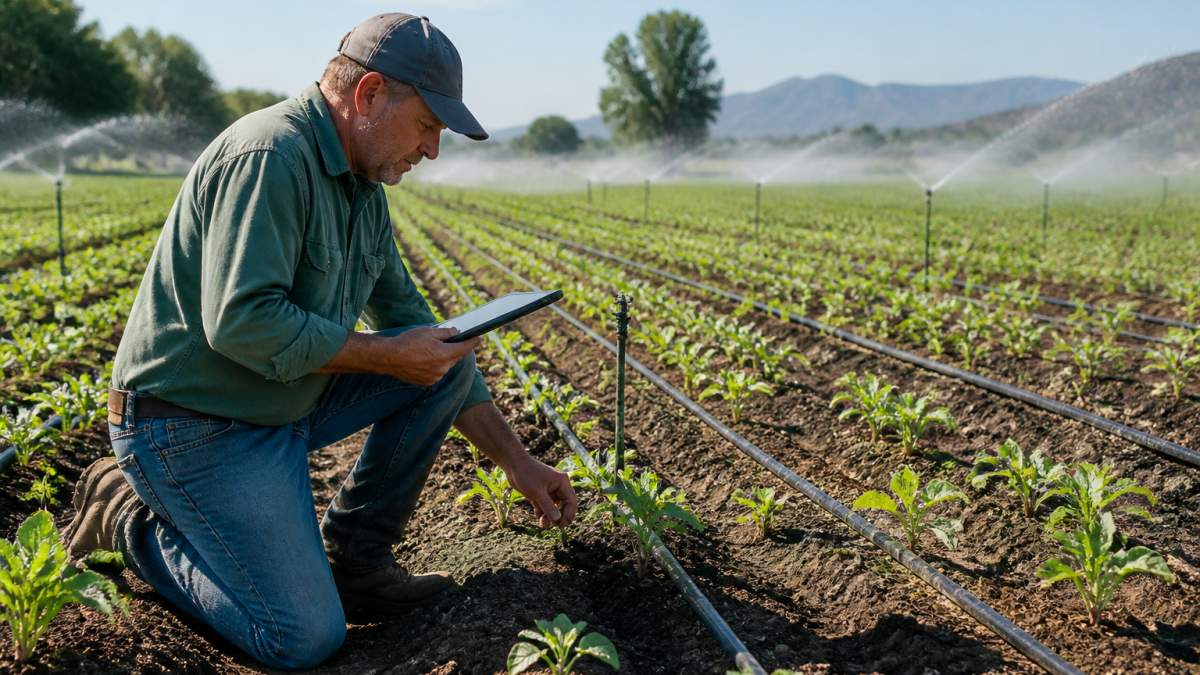
Sprinkler irrigation applies water through the air, mimicking rainfall. Water is pressurized through pipes and forced out through nozzles or sprinkler heads mounted on booms or risers across the field.
This method works well for:
- Row crops like corn, soybeans, and wheat
- Fields with uneven terrain
- Situations where you need frost protection or crop cooling
- Farms that want flexible coverage across large areas
The downside is water loss. Evaporation happens during flight and on leaf surfaces. Wind can push water away from target areas. But for many operations, the simplicity and broad coverage make sprinkler systems the practical choice.
Solid-set and permanent-set sprinkler systems use fixed or semi-permanent pipe networks. Overhead sprinklers mounted on tall stands deliver water across the canopy. Low-volume sprinklers reduce pressure and flow rate, cutting water waste compared to traditional overhead designs.
Drip Irrigation for Agriculture
Drip irrigation delivers water slowly and directly to the soil near plant roots through drip tubes or drip tape with small emitters spaced along the lines. Each emitter releases water at a controlled rate, typically 0.5 to 4 liters per hour, but only if the pump feeding the line holds steady pressure. That is the piece we service: the pump and the VFD (variable frequency drive) that keeps it running at the right speed.
Drip irrigation for agriculture excels at water-use efficiency, but only when the pump delivers steady pressure. Most water reaches the plant instead of evaporating or running off, and soil stays consistently moist, which reduces stress on crops and improves yields. When a pump or VFD drifts out of calibration, that efficiency drops first. Regular servicing keeps it in range.
We service the pumps and VFDs behind drip systems on:
- Vegetable crops and row crops
- Trees and shrubs
- Greenhouse crops
- Fields where water is scarce or expensive
- Situations where you want precise control over water delivery
The trade-off is complexity. Drip systems need pumps, VFDs, filtration and other components sized correctly, plus regular servicing to prevent clogging and pressure loss. That servicing, along with parts for the pumps and VFDs, is where we come in.
Micro-irrigation is the broader category that includes drip systems, subsurface lines, and other low-volume methods. All focus on delivering small amounts of water directly to individual plants or zones.
Surface and Gravity Irrigation
Surface irrigation (also called gravity irrigation) moves water across the soil surface. Water flows downslope or along furrows, soaking into the ground as it moves.
Common types:
- Furrow irrigation: Water runs down trenches between crop rows
- Border irrigation: Water flows across a flat strip bounded by ridges
- Basin irrigation: Water fills a contained area and soaks in
This method is simple and low-cost. It needs minimal equipment and no electrical power for water delivery. But it wastes water through runoff and evaporation. Coverage is uneven, water soaks in quickly at the top of the slope and barely reaches the bottom.
Surface irrigation works best on flat or gently sloped fields with crops that tolerate variable moisture. It’s common in regions where water is abundant and labor is cheap.
Agricultural Sprinkler Systems: Pumps, VFDs and Electrical Servicing
A functioning agricultural sprinkler systems setup depends on the pump and its electrical components working together. You need to match pump output, pressure, and power supply to your specific field and crop.
Most sprinkler systems follow the same basic path: water source → pump → main line → laterals → sprinkler heads.
Start by checking the power supply at the pump location. Confirm voltage, phase, and the distance back to the main panel. Identify obstacles like trees, buildings, or existing power lines that affect the cable run.
Next, calculate the electrical load the pump and VFD will draw. This depends on pump horsepower, required flow rate, and how many hours per day the system runs.
Choose a pump and VFD combination based on flow rate, pressure needs, and how often the system cycles. A VFD lets the pump ramp up and down instead of running at full speed constantly, which saves power and reduces wear.
Once the pump and VFD are chosen, we handle the electrical side: wiring the panel, setting up the VFD, and connecting the pump motor.
Farm Irrigation Pumps: Servicing and Electrical Requirements
Keeping a farm irrigation system running reliably means matching the pump and its electrical setup to what your land and crops actually need. This is where most people stumble.
Assessing Your Water Source and Pump Requirements
Your water source determines what pump you need. Common sources include wells, surface water (ponds, streams, canals), and municipal supplies.
Wells are reliable but require a submersible or centrifugal pump to lift water.
The pump must deliver the right flow rate and pressure. Flow rate is measured in liters per minute. Pressure is measured in pounds per square inch (psi).
Calculate your total flow requirement by multiplying the number of sprinklers by the flow per sprinkler.
Pump sizing is critical. An undersized pump won’t deliver enough water. An oversized pump wastes energy and money. Work with a supplier or engineer to match pump horsepower to your field size and water source.
Calculating Crop Water Requirements and Flow Rate
Every crop has a peak water need, usually during rapid growth or fruit development. This peak demand determines your system’s flow rate.
Crop water requirements depend on:
- Crop type: Vegetables need more water than grains
- Growth stage: Seedlings need less than mature plants
- Soil type: Sandy soil needs more frequent watering; clay holds water longer
- Climate: Hot, dry regions need more water; cool, humid regions need less
- Rainfall: Subtract average monthly rainfall from crop needs
Your local agricultural extension office publishes crop water requirement tables. These show how much water (in millimeters) each crop needs per week or month.
Once you know the crop water requirement, calculate the flow rate your system must deliver. Divide the total water needed by the number of days between irrigations, then divide by the area to get liters per minute per hectare. This tells you what size pump and pipe you need.
Pump Stations and Electrical Controls
The pumping station at your water source includes the pump, motor and electrical controls. A VFD (variable frequency drive) lets the motor match pump output to actual demand, which cuts energy use and reduces wear on the system. We supply, service and repair pumps, VFDs and parts, and we service reel guns too, so irrigation keeps running through the season.
Irrigation Pump Electrical Maintenance: Keeping Your System Running
A well-maintained irrigation system maintenance routine prevents costly failures and extends equipment life.
VFDs, Pump Servicing, and Reel Gun Maintenance
Variable frequency drives (VFDs) control pump speed and reel gun travel speed with precision, but they need regular attention to keep running reliably.
Keep the VFD enclosure clean and make sure cooling fans and vents stay free of dust and debris, since overheating is one of the most common causes of VFD failure. Verify that programmed settings match your pump and reel gun specifications, and recheck them after any power outage or reset.
Schedule regular servicing for your pump and motor instead of waiting for a failure. Keep common parts such as bearings, seals, and belts on hand so a worn component does not shut down irrigation during the season.
For reel gun systems, check the electrical connections on the drive motor and travel speed control regularly. A failing connection or control fault can stop the reel mid-pull and damage the crop underneath.
Electrical System Checks and Safety
Pump motors run on electricity. Electrical problems are common and dangerous if not handled correctly.
Check motor connections monthly. Loose terminals cause overheating and failure. Tighten any loose bolts or connectors. Inspect wiring for cracks or damage; water and electricity don’t mix safely.
Test the grounding system. A properly grounded motor is safer and runs more efficiently. Faulty grounding can cause shocks or equipment damage.
Have a licensed electrician inspect your system annually. At Bighorn Electric, we recommend a full electrical check before each irrigation season. We test motor insulation, check control circuits, and verify all safety devices are working.
Change motor oil if you have a gear-driven pump. Most motors need oil changes every 500-1,000 operating hours.
Seasonal Startup and Shutdown Procedures
Before each irrigation season, run a full check of your pump and electrical system.
Startup checklist:
- Check pump motor for loose bolts, corrosion, or damage
- Inspect electrical connections and VFD enclosure for moisture or dust
- Verify VFD programmed settings match pump and reel gun specifications
- Test grounding and safety devices before startup
- Run the pump at low speed briefly to confirm smooth operation
- Check the reel gun drive motor and travel speed control for proper function
Shutdown checklist:
- De-energize and disconnect the pump motor and VFD per manufacturer guidance
- Protect the VFD enclosure and control panel from moisture and debris
- Inspect reel gun motor and cable components, then store them in a dry location
- Cover pump intake to prevent debris entry
- Check wiring and connections for wear before winter storage
In cold climates, freezing temperatures can damage motor windings, VFD components, and electrical connections left exposed over winter. Protect and store electrical equipment properly before the season ends.
Choosing the Right System: Crop Type, Field Conditions, and Water-Use Efficiency
Your choice of system depends on several factors working together. No single system is best for all situations.
Sprinkler systems suit row crops, broad fields, and situations where frost protection or crop cooling is valuable.
Drip irrigation excels at water-use efficiency (85-95%) and works well for vegetables, trees, and greenhouse crops.
Surface irrigation is cheapest to install and operate. It works on flat fields with adequate water supply.
Consider your soil type.
Think about labor. Sprinkler systems need monitoring and adjustment. Drip systems need regular maintenance to prevent clogging.
Calculate the total cost: equipment, installation, energy, water, and maintenance.
Irrigation is one of the most important investments a farm can make.
If your irrigation system’s pumps, VFDs (variable frequency drives), or reel guns need electrical troubleshooting, servicing, or parts, Bighorn Electric brings over 14 years of experience working with agricultural operations. Book online or call to discuss your system’s needs, we guarantee a 48-hour response for urgent issues.
Frequently Asked Questions
What are the three main types of agricultural irrigation systems?
The three primary types are sprinkler irrigation (which distributes water through overhead or low-volume sprinklers), drip irrigation (which delivers water directly to soil via tubes or tape for high efficiency), and surface or gravity irrigation (which floods or furrows fields using natural water flow). Each suits different crops, field layouts, and water sources. Sprinkler systems work well for row crops and cooling; drip irrigation excels for vegetable and tree crops with minimal water waste; surface irrigation suits flat terrain with abundant water supply.
How do I choose an irrigation system for my farm?
Start by assessing your water source (well, pond, stream), soil type, crop type, field slope, and budget. Drip irrigation for agriculture offers the highest water-use efficiency and suits vegetables, trees, and shrubs, but requires more maintenance. Agricultural sprinkler systems work for most row crops and provide frost protection and crop cooling. Surface irrigation is cheapest upfront but wastes more water. Calculate your crop water requirements based on rainfall, soil moisture, and growing season. Consider ongoing operating costs, including pump energy use and maintenance. Consult a professional if your system is complex or serves multiple fields.
What is a major downside to drip irrigation?
Drip systems are vulnerable to clogging from sediment, algae, or mineral buildup in drip tubes and tape. This reduces water distribution uniformity and can damage emitters. Poor water quality or inadequate filtration accelerates the problem. Regular maintenance, including filter cleaning and periodic flushing, is essential. Initial installation cost is also higher than surface irrigation, though lower operating costs often offset this over time.
What electrical components should be checked in an agricultural irrigation system?
Inspect the pump motor for proper voltage and grounding, check all wiring connections for corrosion or damage, test pressure switches and flow sensors, and verify that control panels are dry and protected from moisture. Ensure the pumping station is safely installed with proper disconnect switches and circuit protection. Have a licensed electrician inspect your system annually and after any repairs. Electrical faults can reduce pump efficiency, damage equipment, or create safety hazards on the farm.
0 Comments