

Table of Contents
- What to Look for When You Need to Find Reliable Electricians
- How to Verify an Electrician’s Qualifications and Insurance
- Questions to Ask Before Hiring an Electrician
- Comparing Quotes and Understanding Pricing Transparency
- Electrical Repair Insurance Coverage: What You Need to Know
- Electrical Safety Steps During a Power Emergency
- Red Flags and How to Avoid Unreliable Contractors
- Frequently Asked Questions
Last Updated: October 16, 2026
What to Look for When You Need to Find Reliable Electricians
Finding a reliable electrician is one of the most important decisions you’ll make for your home or business.
When you’re looking to find reliable electricians, start by checking three core things: licensing, insurance, and experience.
Licensed electricians have passed exams and meet safety codes, insured contractors protect you if something goes wrong, and experienced professionals handle complex jobs without cutting corners.
The difference between a reliable electrician and an unreliable one often comes down to communication: do they answer calls, give clear timelines, and explain their work?
How to Verify an Electrician’s Qualifications and Insurance
Most ranking pages tell you to hire a “licensed and insured” electrician. Almost none explain how to confirm it yourself. This section does.
In British Columbia, electrical work is regulated under the Safety Standards Act by Technical Safety BC. Two separate things matter:
- The individual electrician’s certification. A journeyperson holds a Certificate of Qualification; apprentices hold apprenticeship levels. Certification comes from SkilledTradesBC and proves the person passed the required exams and hours.
- The contractor’s licence. The company needs a valid electrical contractor licence issued by Technical Safety BC. A licensed electrician working for an unlicensed contractor is still a problem for you.
You want both. Ask for the individual’s certificate number and the contractor’s licence number, then confirm each with the issuing body. It takes minutes and is the single most useful check you can run.
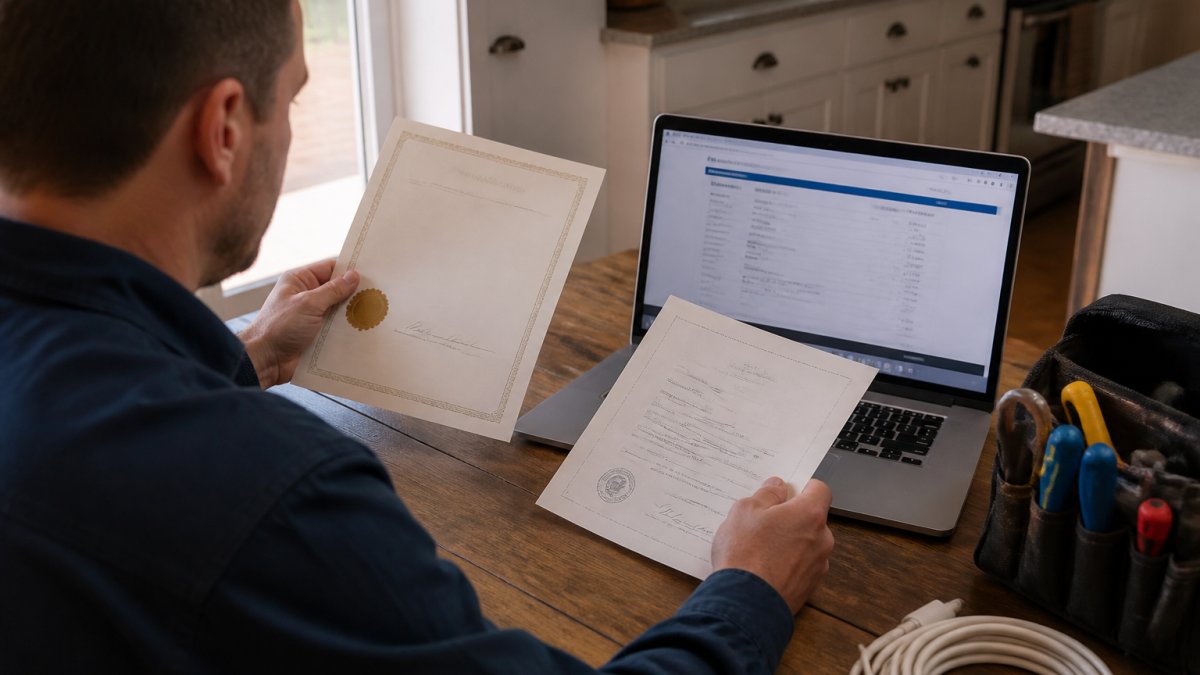
Ask for the certificate number and the contractor licence number in writing (email is fine) before the site visit. A legitimate contractor sends both without hesitation. Hesitation is itself information.
Insurance: what to ask for and who to call
Two coverages protect you, and they do different jobs:
- Commercial general liability (CGL) insurance covers third-party bodily injury and property damage, for example if the crew damages your home or someone is hurt on your property. Ask for a current certificate of insurance naming the contractor.
- Workers’ compensation coverage through WorkSafeBC covers the contractor’s workers if they’re injured on your job. If a worker is hurt and the contractor isn’t covered, you can be exposed to liability. Ask for a WorkSafeBC clearance letter confirming the account is in good standing.
Don’t rely on a photocopied certificate. Call the broker listed on it to confirm the policy is active and the coverage limits, and check workers’ compensation status directly with WorkSafeBC rather than trusting a screenshot.
What to request before work starts
- The electrician’s Certificate of Qualification number
- The contractor’s electrical contractor licence number
- A current certificate of insurance with policy limits and the broker’s contact details
- A WorkSafeBC clearance letter
- Two or three recent references for work similar to yours
- A written scope of work and quote (covered in the next section)
Permits and inspections
Many electrical jobs, panel changes, service upgrades, new circuits, and most renovations, require a permit and inspection. In British Columbia, permits are typically pulled through Technical Safety BC or the local authority having jurisdiction, and the work is inspected before sign-off. Ask directly: “Will you pull the permit, and who is the inspector?” A reliable contractor answers without hedging; one who suggests skipping the permit is telling you how they operate.
Unpermitted electrical work can void your home insurance and create problems when you sell. If a contractor offers to do the job “off the books” or without a permit, walk away.
Experience that actually matches your job
General experience isn’t the same as relevant experience, a residential service electrician and an industrial controls electrician are different trades in practice. Ask about jobs like yours: a service upgrade, EV charger installation, commercial tenant fit-out, agricultural or irrigation system, or emergency troubleshooting. Ask how many similar jobs they’ve completed in the past year and whether they’ll do the work or send a crew.
If the answer is vague, that is your answer.
Questions to Ask Before Hiring an Electrician
The right questions reveal whether an electrician is worth your time and money:
What’s your pricing structure? Some charge hourly, others quote fixed prices. Understand which approach they use before work begins.
What’s your timeline? Get specific dates and times. Ask if they’ll call before arriving. Confirm their response time for emergencies.
Are you licensed and insured? You already verified this, but asking directly shows you care about credentials, and their response tells you how seriously they take safety.
Can you provide references? Ask for at least three recent customers. Call them.
What’s your warranty on the work? Most electricians warranty labor for one year. Ask what that covers and get it in writing.
Comparing Quotes and Understanding Pricing Transparency
Getting three quotes is easy. Reading them side by side trips up most homeowners, because two quotes for the “same” job can differ by thousands for reasons unrelated to quality.
Ask for the same scope in writing
Before you call anyone, write down exactly what you want done: the fixture or panel, location, access, and whether permits and cleanup are included. Send that same description to every contractor. If one quote covers a like-for-like scope and another a narrower one, you’re comparing two different jobs, not prices.
The line items that actually matter
When you open a quote, look for these elements and compare them one at a time:
| Element | What a clear quote shows | What a vague quote hides |
|---|---|---|
| Labor | Hourly rate or a fixed labor figure, plus estimated hours | A single lump sum with no breakdown |
| Materials | Specific products, brands, and quantities | “Materials included” with no detail |
| Call-out or trip fee | Stated separately, and whether it is waived if you proceed | Buried in the total or not mentioned |
| Permits | Stated as included or as a pass-through cost | Silent, leaving you to discover it later |
| Disposal and cleanup | Stated as included or extra | Not addressed |
| Warranty | Length and what it covers, in writing | “Guaranteed” with no terms |
| Payment schedule | Deposit amount and when the balance is due | Full payment requested upfront |
Call-out fees, minimums, and after-hours rates
A call-out fee (sometimes called a trip charge or minimum) is what the contractor charges just to show up, before any work begins. It’s normal, not a red flag, but it should be disclosed up front. Ask each contractor:
- What is your call-out fee, and is it credited toward the job if I hire you?
- Is there a minimum charge, and how many hours does it cover?
- What is your after-hours or emergency rate compared to your standard rate?
- Do you charge for travel outside the immediate area?
These four questions alone will separate the transparent contractors from the ones who plan to surprise you.
Change orders: how unexpected work should be handled
Almost every electrical job can turn up something unexpected once a wall is open or a panel is inspected. The difference between a reliable contractor and an unreliable one isn’t whether surprises happen, it’s how they’re handled. Expect a written change order: the contractor stops, explains what was found, prices the additional work, and waits for your written approval before proceeding. No verbal “we’ll sort it out later,” and no work billed after the fact without your sign-off.
Ask every contractor the same question before you hire: “If you find something unexpected, how do you handle it?” The answer you want is a written change order approved by you before any extra work begins. The answer you should walk away from is “we’ll deal with it as we go.”
How to read a suspiciously low or high quote
A quote far below the others usually means one of four things: the scope is narrower than you think, the materials are lower grade, the permit isn’t included, or the contractor plans to add charges later. Ask them to itemize and explain the difference.
A quote far above the others isn’t automatically wrong. It may include a permit, premium materials, a longer warranty, or more thorough remediation. Ask what’s included that the others left out. If the answer is “we’re just better,” that’s not a justification.
Get it in writing, every time
Everything that matters should be in the written quote: scope, materials, timeline, payment schedule, warranty, and the change-order process. A verbal agreement is worth nothing in a dispute, and a contractor who resists putting terms in writing is giving you the clearest signal you’ll get.
Keep every quote, email, and change order in one folder. If a dispute ever arises, the paper trail is your protection, and it is also what a regulator or insurer will ask for.
Electrical Repair Insurance Coverage: What You Need to Know
Most homeowners assume their insurance covers electrical repairs. Often, it doesn’t. Understanding your coverage prevents expensive surprises.
Some policies cover specific electrical upgrades; others exclude them entirely.
If damage was caused by neglect or deferred maintenance, insurance may deny the claim. If damage is sudden and accidental, coverage is more likely.
For commercial properties, coverage varies even more. Petroleum operations and agricultural facilities have specialized insurance needs.
Electrical Safety Steps During a Power Emergency
When a power emergency happens, your first instinct might be to fix it yourself. Don’t. Electrical emergencies are dangerous.
Here’s what to do:
- Turn off power at the main breaker if it’s safe to reach
- Leave the area if you smell burning, see sparks, or hear unusual sounds
- Call an electrician immediately, don’t wait for business hours
- Document the damage with photos for your insurance claim
- Don’t touch wet areas or standing water near electrical equipment
Some emergencies require immediate action: if you see flames, call 911 first; if you smell gas along with electrical burning, evacuate and call emergency services.
A reliable electrician offers emergency service. A guaranteed 48-hour response time for urgent electrical needs matters when your business or home is without power.
Red Flags and How to Avoid Unreliable Contractors
Certain warning signs identify unreliable electricians before you hire them:
They pressure you to decide immediately. A trustworthy electrician gives you time to think and compare quotes, not high-pressure sales tactics.
They won’t provide references. Every legitimate electrician has completed jobs they can reference.
They quote without inspecting the work. A real electrician looks at the job before quoting.
They don’t mention permits or inspections. Some work legally requires permits.
They have no physical address or business license. Verify they’re a registered business.
They use generic language about pricing. “It depends” isn’t good enough.
They dismiss your questions. If an electrician acts annoyed by your questions, they’re not the right fit.
Finding the right electrician protects your safety and your investment. Start by verifying licensing and insurance.
Frequently Asked Questions
How do I check whether an electrician is qualified and insured?
Contact your provincial electrical regulatory body to verify the electrician holds a valid license. Ask the electrician directly for proof of general liability insurance and Workers’ Compensation coverage. Request their certificate of insurance, which shows policy numbers and coverage limits. Licensed electricians carry proof of both qualifications and insurance as standard business practice. Never hire someone who cannot produce these documents on request.
What questions should I ask before hiring an electrician?
Ask how long they’ve been in business, whether they’re licensed and insured, if they guarantee their work, how they handle unexpected issues discovered during the job, what their response time is for emergencies, and whether they provide written quotes. Also ask about their experience with your specific type of work, such as residential renovations, commercial maintenance, or specialized industrial systems. Request references from recent projects similar to yours.
Does home insurance cover emergency electrical repairs?
Coverage depends on your specific policy and the cause of the damage. Most homeowners policies cover damage from electrical faults that caused fires, but they typically do not cover the cost of repairing the faulty wiring itself. Some policies include coverage for emergency service calls. Review your policy documents or contact your insurance provider to confirm what electrical repairs are covered. For preventive maintenance and routine repairs, you usually pay out of pocket.
What should I do while waiting for an electrician during an electrical emergency?
Turn off the power to the affected area at your breaker panel if it’s safe to do so. Do not touch wet electrical equipment or water near electrical outlets. Avoid using that circuit until the electrician arrives. Keep children and pets away from the problem area. If there’s a fire risk, evacuate and call emergency services. Document the problem with photos if safe. Stay in a safe location and wait for the electrician to arrive before attempting any repairs yourself.

0 Comments