
Table of Contents
- When Homeowners Insurance Covers Emergency Electrical Repair
- Sudden and Accidental Damage vs. Wear and Tear
- Are Electrical Faults Covered by Home Insurance
- Power Surge Damage and Home Insurance Coverage
- Common Exclusions and Policy Limitations
- Electrical Damage Claim Documentation and Filing Steps
- Deductibles, Coverage Limits, and Repair Economics
- Emergency Mitigation and Authorization Before Repairs
- Frequently Asked Questions
Last Updated: October 11, 2026
When Homeowners Insurance Covers Emergency Electrical Repair
Emergency electrical repair coverage depends on what caused the damage. Your homeowners insurance typically covers sudden, unexpected electrical damage, but not damage from wear and tear or lack of maintenance.
Most homeowners insurance policies cover electrical damage caused by covered perils: fire, lightning strikes, and external power surges. If a lightning bolt damages your electrical panel or a surge fries your wiring, dwelling coverage usually applies. The key word is “sudden”, damage over time is typically denied.
Dwelling coverage pays for repairs to wiring, panels, and outlets. Personal property coverage may apply if electrical damage destroyed appliances or electronics.
Before calling your insurance company, document everything with photos or video. Take clear pictures of the damaged area, any burned-out outlets, or melted wires. This documentation speeds up claim processing and strengthens your case.
Sudden and Accidental Damage vs. Wear and Tear
Insurance companies distinguish between sudden events and gradual deterioration. A power surge in a thunderstorm is sudden and covered; faulty wiring that degrades over 10 years is wear and tear and is not. If an electrician finds corroded wiring or outdated components that failed, your insurer may deny the claim, arguing lack of maintenance rather than a covered peril.
Proving causation is critical: you must show a specific covered event caused the damage, not poor maintenance. A licensed electrician can document whether damage came from external shock (covered) or internal failure (not covered).
Are Electrical Faults Covered by Home Insurance
Electrical faults themselves are usually not covered unless they result from a covered peril. If faulty wiring causes a fire, the fire damage may be covered. This distinction determines which coverage applies and what you’ll recover.
Dwelling Coverage: Wiring, Panels, and Built-In Systems
Your dwelling coverage protects electrical infrastructure: wiring, circuit breakers, the main panel, outlets, switches, and hardwired systems. It applies only to damage from covered perils, fire, lightning, wind, theft, vandalism, or external power surges. If an electrician finds wiring that gradually corroded and failed, that’s wear and tear, not covered. You’ll pay the full cost to rewire or repair.
Personal Property Coverage: Appliances and Electronics
Personal property coverage reimburses you for appliances and electronics damaged by power surges (minus deductible), but has lower limits, often $2,500 to $5,000 for electronics. It does not cover damage to the electrical system itself. If both wiring and appliances are damaged, you may file under both coverages, each with its own deductible.
Equipment-Breakdown Coverage: A Separate Endorsement
Standard homeowners policies exclude damage from mechanical or electrical breakdown, for example, a failed air conditioning compressor or water heater element. Equipment-breakdown is an optional endorsement covering sudden failure of HVAC systems, water heaters, refrigerators, and washers. It typically costs $100-$300 per year and is worth considering if you have expensive or aging appliances.
The Gray Area: Faulty Wiring and Cascading Damage
If faulty wiring triggers a power surge damaging appliances, the surge is the covered peril, so personal property coverage should apply. However, insurers may investigate whether the fault was pre-existing and deny the claim if you ignored a known hazard. Report any discovered faulty wiring to your insurer in writing before damage occurs; this establishes disclosure and acceptance of risk.
Coverage Limits and Deductibles by Type
Dwelling coverage limits range from $100,000 to $500,000. Personal property coverage is usually 50-70% of your dwelling limit, but electronics and appliances often have sub-limits of $2,500-$5,000 each. Your deductible applies per claim, not per item, so a single surge damaging both panel and refrigerator triggers one deductible.
Before an electrical emergency occurs, review your policy documents and identify your dwelling limit, personal property limit, electronics sub-limit, and deductible. Call your agent and ask whether equipment-breakdown coverage is included. Knowing these details before damage happens lets you make faster, smarter decisions during an emergency.
Power Surge Damage and Home Insurance Coverage
Power surges from lightning, downed power lines, or utility faults are usually covered. Dwelling coverage protects wiring, panels, and built-in systems; surge damage to individual appliances may not be covered. Whole-home surge protectors absorb excess voltage and reduce both damage risk and claim complexity.
Common Exclusions and Policy Limitations
Most policies exclude damage from lack of maintenance, gradual wear, corrosion, intentional damage, and unpermitted work. Some limit coverage for homeowner negligence. Understanding these exclusions before an emergency prevents costly surprises.
| Exclusion Type | What It Means | Your Responsibility |
|---|---|---|
| Wear and tear | Gradual damage over time | Full repair cost |
| Lack of maintenance | Failure to repair known problems | Full repair cost |
| Unpermitted work | Electrical work done without permits | Full repair cost |
| Intentional damage | Deliberate harm to the system | Full repair cost |
| Negligence | Careless actions that caused damage | Possible partial coverage or denial |
Electrical Damage Claim Documentation and Filing Steps
When emergency electrical repair damage occurs, documentation is everything. Your insurer will investigate the claim, and strong documentation makes the difference between approval and denial.
Start by taking photos and videos of all visible damage. Capture burned-out outlets, scorched wiring, damaged panels, and any other affected areas. Include wide shots showing the location and close-ups showing detail. Timestamp your photos if possible, this proves when you documented the damage.
Next, get a professional inspection. Call a licensed electrician to assess the damage and provide a written report. This report should document what failed, what caused the failure, and what repairs are needed.
Write down everything you remember about the event. When did the damage occur? What weather was happening? Did you hear a loud noise, see sparks, or smell burning? Did the damage affect one outlet or your whole home? This narrative helps your insurer understand the incident.
Gather receipts and proof of the damage. If appliances were destroyed, keep the receipts. If you had to call an emergency electrician before filing a claim, keep that invoice. These documents support the scope and severity of your claim.
File your claim promptly, most policies require notification within a specific timeframe. Delays can give insurers grounds to deny coverage. Contact your insurance agent the same day the damage occurs if possible.
Deductibles, Coverage Limits, and Repair Economics
Your deductible is what you pay out of pocket before insurance kicks in. Most homeowners have deductibles between $500 and $2,500. Coverage limits are the maximum your insurer will pay for a single claim or per year. Standard dwelling coverage limits range from $100,000 to $500,000 depending on your home’s replacement value and policy tier.
The repair cost is the starting point for any claim decision. Here’s how to evaluate whether filing makes financial sense:
Step 1: Compare repair cost to deductible. If your emergency electrical repair costs $800 and your deductible is $1,000, you pay the full $800 out of pocket, filing gains you nothing. Insurance only pays when the repair cost exceeds your deductible. If the repair costs $2,500 and your deductible is $1,000, the insurer covers $1,500.
Step 2: Check your coverage limit. If your home’s electrical system needs $15,000 in repairs but your dwelling coverage limit is $10,000, the insurer pays up to $10,000 and you cover the remaining $5,000. Review your policy documents to confirm your dwelling coverage limit; many homeowners discover it’s lower than they assumed.
Step 3: Calculate the net benefit. Subtract your deductible from the repair cost. If the result is less than $500, the claim may not be worth filing. If it’s $2,000 or more, filing is likely worthwhile.
Step 4: Factor in premium increases. Filing an electrical damage claim can raise your homeowners insurance premiums at renewal. A single claim typically increases premiums by 5-15% depending on your insurer and claims history. If your premium is $1,200 per year and increases 10%, you’ll pay an extra $120 annually. Over three years, that’s $360 in additional premiums. If your claim payout is only $800, the long-term cost may exceed the benefit.
Example: Your kitchen electrical outlet catches fire, damaging the outlet, nearby wiring, and a small section of drywall. A licensed electrician estimates $3,200 in repairs. Your deductible is $1,000 and your dwelling coverage limit is $250,000. The insurer would pay $2,200 ($3,200 minus $1,000). However, if your annual premium is $1,500 and the claim increases it by 10% ($150/year), you’ll pay an extra $450 over three years.
Conversely, if the repair costs $1,200, the insurer pays only $200 ($1,200 − $1,000 deductible). The three-year premium increase of $450 exceeds the $200 payout, so paying out of pocket is smarter.
Before filing, call your insurance agent and ask: “What is my deductible, my dwelling coverage limit, and what is the typical premium increase for an electrical damage claim?” Armed with these numbers, you can calculate the true cost-benefit of filing.
One more consideration: some insurers offer claim forgiveness or a limited number of claim-free years that reset your premium. Ask your agent whether your policy includes these provisions, they can shift the economics in favor of filing.
Emergency Mitigation and Authorization Before Repairs
When emergency electrical damage occurs, your first priority is safety, not insurance. If there’s active danger, sparking, burning, or electrical hazard, evacuate immediately and call emergency services or your local fire department.
Once the immediate danger passes, you can begin mitigation. Mitigation means taking steps to prevent further damage. If water has damaged your electrical system, turning off power at the main panel prevents additional short circuits. If a fire has scorched wiring, isolating that circuit prevents spread.
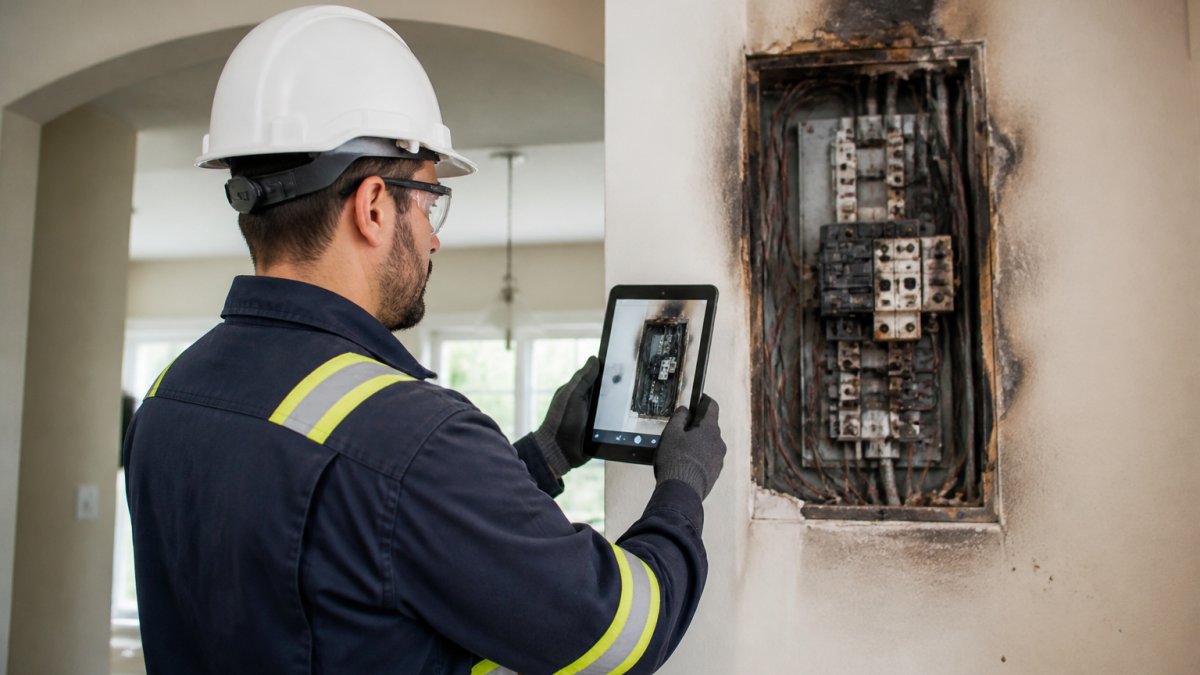
Before you hire an electrician for repairs, contact your insurance company. Your policy may require you to get written authorization before spending money on repairs. Some insurers send an adjuster to inspect the damage before approving the claim. Getting authorization first ensures your repair costs are covered and prevents disputes later.
When you call Bighorn Electric for emergency electrical repair, we’ll document the damage thoroughly and provide you with a detailed estimate. This estimate becomes part of your insurance claim. Our 48-hour on-site response guarantee means we’ll be there quickly to stabilize the situation and help you understand your options.
Don’t attempt electrical repairs yourself. Electricity is dangerous, and unpermitted DIY work may void your insurance coverage. A licensed electrician ensures the work meets code, is done safely, and satisfies your insurer’s requirements.
Emergency electrical repair coverage protects you when sudden, unexpected damage occurs, but only if you understand your policy’s terms. Most homeowners insurance covers damage from lightning, power surges, and fire, but excludes wear and tear and lack of maintenance. The key to successful claims is documentation, prompt reporting, and professional assessment. When emergency electrical damage strikes, Bighorn Electric’s licensed and bonded team can help you assess the damage, document it for your insurer, and get repairs done safely.
Frequently Asked Questions
Does home insurance cover emergency electrical repairs?
Coverage depends on whether the damage is sudden and accidental. If a power surge, lightning strike, or electrical fire causes unexpected damage, homeowners insurance typically covers the repair costs under dwelling coverage. However, damage from wear and tear, lack of maintenance, or faulty wiring that develops over time is usually excluded. Review your policy wording or contact your insurer to confirm what your specific coverage includes.
Are electrical faults covered by home insurance?
Most homeowners insurance policies do not cover electrical faults that develop gradually, such as faulty wiring, deteriorating electrical panels, or circuit breaker failures due to age or poor maintenance. These are considered pre-existing damage or wear and tear. However, if a fault causes a sudden fire or electrical damage to other parts of your home, the resulting property damage may be covered. The distinction is critical: the fault itself is typically excluded, but the sudden damage it causes may not be.
What documentation do I need for an electrical damage claim?
When filing an electrical damage claim, gather photographs or video of the damage, repair estimates from licensed electricians, proof of the incident (such as fire department reports for electrical fires), receipts for any temporary repairs or emergency services, and a detailed written description of what happened. Your insurer will also require your policy details and a signed proof of loss statement. Professional documentation strengthens your claim and speeds up the investigation process.
Does home insurance cover power surge damage?
Power surge damage is often covered under homeowners insurance if it results in sudden, accidental property damage. However, coverage varies by policy. Some policies include equipment breakdown coverage, which may cover damage to electrical appliances and equipment caused by power surges. Others may exclude surge-related damage entirely. Check your policy wording or call your insurer to confirm whether power surge damage is included in your dwelling and personal property coverage.


0 Comments