
Table of Contents
- Identify Whether You Have a Genuine Electrical Emergency
- Immediate Safety Steps Before Help Arrives
- How to Find an Emergency Electrician in Your Area
- How to Verify an Electrician’s Credentials and Licensing
- Questions to Ask an Emergency Electrician Before Booking
- Understanding Electrical Repair Insurance Coverage
- What to Expect: Response Times, Costs, and Next Steps
- Frequently Asked Questions
Last Updated: October 21, 2026
Identify Whether You Have a Genuine Electrical Emergency
An electrical emergency is a dangerous electrical situation that poses an immediate risk to your safety, property, or operations and requires urgent professional attention. Not every electrical problem qualifies as an emergency, so knowing the difference helps you respond appropriately and avoid unnecessary after-hours call-out fees.
True electrical emergencies include sparking outlets, burning smells from electrical panels, exposed live wires, complete loss of power to critical systems, or flickering lights accompanied by heat. These situations demand immediate action because they create fire hazards or electrocution risks. In contrast, a single dead outlet or a tripped breaker that resets normally are usually maintenance issues that can wait for business hours.
The challenge is that some problems feel urgent but aren’t dangerous. A circuit breaker that trips repeatedly might be annoying, but if it’s protecting your system as designed, it’s not an emergency, it’s a diagnostic issue. However, if that breaker is hot to the touch or won’t stay reset, that’s different. The distinction matters because calling an emergency electrician for a non-emergency can cost significantly more than scheduling a regular appointment.
Before calling for emergency service, ask yourself these questions: Is there an active safety hazard right now? Could this situation cause a fire or electrical shock? Is a critical system down that affects health, safety, or business operations? If you answer yes to any of these, you have a genuine emergency. If you’re unsure, describe what you’re seeing to the electrician when you call, they can often tell over the phone whether it truly requires emergency response.
Immediate Safety Steps Before Help Arrives
While waiting for an emergency electrician to arrive, take specific steps to protect yourself and minimize damage. Your first priority is preventing electrical shock or fire until professional help reaches you.
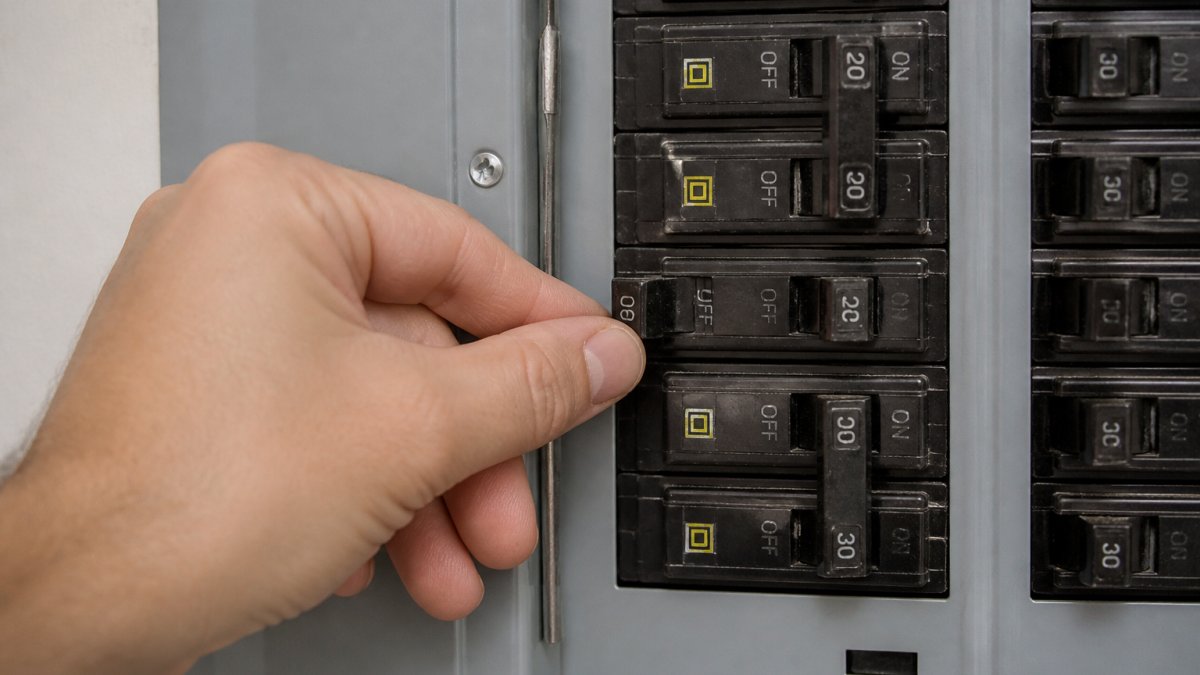
If you see sparking or smell burning plastic or rubber, turn off power to that circuit immediately using your breaker panel. Locate your main electrical panel, find the breaker that controls the affected circuit, and flip it to the OFF position.
If there is active fire, do not attempt to extinguish it with water, water conducts electricity and will make the situation worse. Use a Class C fire extinguisher if one is available and you know how to operate it safely. If the fire is spreading or you cannot control it immediately, evacuate the building and call emergency services.
Keep people and pets away from the affected area. If water is involved, burst pipes near electrical equipment, flooding, or wet conditions around outlets, do not walk through standing water to reach the breaker panel. Stay dry and avoid contact with any wet surfaces near electrical equipment.
Document what happened if it’s safe to do so. Take photos of any visible damage, scorching, or unusual conditions. This information helps the electrician diagnose the problem faster and can be useful for insurance claims if property damage occurs.
How to Find an Emergency Electrician in Your Area
Finding a qualified emergency electrician quickly requires knowing where to look and what to ask for. Start by searching online for “emergency electrician” combined with your location to identify licensed professionals who operate 24/7 or after standard business hours. Many electricians maintain emergency lines specifically for urgent calls, and their websites typically list availability and response-time commitments.
Ask neighbors, friends, or colleagues for referrals to electricians they’ve used. Personal recommendations often lead to trustworthy service because people share their real experiences. Local Facebook groups or community forums frequently discuss contractors, and you can see how current and past customers rate their service.
Contact your local electrical contractors association or chamber of commerce for referrals. These organizations maintain lists of licensed, bonded professionals in your area. Calling multiple electricians allows you to compare availability and get a sense of their responsiveness, if they answer quickly and answer your questions clearly, that’s a positive sign.
When you call, be specific about your situation. Describe what you’re experiencing: “We have sparking from an outlet and a burning smell” or “Our main breaker keeps tripping and won’t stay on.” This helps the electrician assess urgency and determine if they can handle it or if they need to refer you elsewhere. Ask about their current availability and estimated arrival time.
Bighorn Electric provides a guaranteed 48-hour on-site response for urgent electrical needs, combining reliability with professional expertise. Our licensed, insured, and bonded team handles emergency repairs across residential and commercial properties, ensuring your electrical system is safe and operational.
How to Verify an Electrician’s Credentials and Licensing
Before booking an emergency electrician, verify that they hold proper credentials and licensing. This protects you from unqualified workers and ensures the work meets local electrical codes and safety standards.
Check that the electrician holds a valid provincial electrical license. In most provinces, electricians must be licensed and registered with the provincial regulatory body. You can verify licensing status by contacting the appropriate provincial electrical safety authority or checking their online registry.
Confirm that the electrician carries liability insurance and bonding. Insurance protects you if property damage occurs during the work. Bonding provides recourse if the work is faulty or incomplete. Ask the electrician directly for proof of insurance and bonding, legitimate professionals provide this information readily.
Ask about their experience with your specific type of problem. An electrician experienced with residential emergencies may not be equally qualified for industrial or petroleum electrical systems. If you operate a specialized facility, agricultural irrigation, petroleum infrastructure, or industrial equipment, confirm the electrician has relevant experience before booking.
Check online reviews and ratings on Google, industry directories, and local business listings. Look for patterns in feedback rather than focusing on individual reviews. Consistent praise for responsiveness, professionalism, and fair pricing is a strong indicator. If reviews mention the electrician failing to show up or overcharging for emergency calls, keep looking.
Ask for references from past emergency calls. Legitimate electricians can provide contact information for recent clients who can speak to their reliability and work quality. A quick call to a reference takes five minutes and provides real insight into what to expect.
Questions to Ask an Emergency Electrician Before Booking
Asking the right questions before committing to an emergency electrician helps you understand costs, timeline, and what to expect. This conversation protects you from surprises and ensures you’re working with someone qualified and transparent.
Start by asking their minimum service charge for emergency calls. Many electricians charge a call-out fee plus hourly labor.
Inquire about their diagnostic process. Will they charge to identify the problem, or is diagnosis included in the service fee? Some electricians charge a separate diagnostic fee before providing a repair estimate. Knowing this upfront prevents confusion when the bill arrives.
Ask how they handle estimates for repairs. Do they provide a fixed price for the repair once they’ve diagnosed the issue, or do they charge hourly? If hourly, ask for an estimate of how long the repair typically takes.
Request their response-time commitment. How quickly can they arrive? Will they call when they’re on the way? Reliable emergency electricians provide specific timeframes and communicate clearly about delays.
Ask what payment methods they accept. Some emergency services require payment upfront or by credit card over the phone. Knowing this prevents awkward conversations at the end of the call.
Inquire whether they warrant their work. If they repair something and it fails within a certain period, will they return to fix it at no charge? Warranties demonstrate confidence in the quality of work.
Finally, ask whether they can identify the root cause of the problem or just fix the immediate issue. Some electricians address only the symptom, leaving you vulnerable to the same problem recurring.
Understanding Electrical Repair Insurance Coverage
Insurance coverage for electrical repairs depends on your policy type and the specific circumstances of the damage. Understanding what your policy covers helps you manage costs and file claims appropriately.
Most homeowners insurance policies cover sudden, accidental electrical damage, for example, damage from a lightning strike or an unexpected electrical fire. However, they typically do NOT cover damage from wear and tear, lack of maintenance, or gradual deterioration of electrical systems. If your electrical panel is 30 years old and finally fails, that’s usually considered maintenance, not a covered loss.
Check your policy documents or contact your insurance agent to understand your specific coverage. Ask whether electrical repairs are covered under your dwelling coverage or if there’s a separate rider for electrical systems. Ask about the deductible, the amount you pay before insurance kicks in. For emergency repairs, knowing your deductible helps you decide whether filing a claim makes financial sense.
Document the damage with photos before the electrician begins work. Insurance companies often require photographic evidence of the damage. Take clear photos of any scorching, burned components, or visible damage to outlets, panels, or wiring.
Obtain an itemized invoice from the electrician detailing what was repaired, parts replaced, and labor costs. Insurance adjusters review these invoices carefully. A detailed invoice strengthens your claim and helps the adjuster understand what happened.
If the repair cost exceeds your deductible, file a claim with your insurance company. Provide the photos, the electrician’s invoice, and a written description of what happened. The insurance company may send an adjuster to inspect the work before approving payment.
What to Expect: Response Times, Costs, and Next Steps
Understanding what happens after you call an emergency electrician helps you prepare and manage expectations. Response times and costs vary based on demand, time of day, and the complexity of your situation.
Emergency electricians typically respond within 30 minutes to a few hours, depending on call volume and their current location. Late-night calls may have longer wait times because fewer electricians are available.
Costs for emergency calls are higher than standard appointments because the electrician is responding outside normal business hours and may turn away other work to reach you.
When the electrician arrives, they’ll assess the problem, diagnose the cause, and explain what needs to be fixed. They’ll provide a repair estimate before starting work, always get this in writing.
The repair itself may take 30 minutes to several hours depending on complexity. Simple fixes like replacing a breaker or outlet take less time. Complex problems involving rewiring or panel upgrades take longer.
After the repair is complete, ask the electrician to test the system and confirm everything is working safely. Request a written summary of what was repaired, any parts replaced, and recommendations for follow-up maintenance or upgrades.
Once the immediate emergency is resolved, schedule a follow-up inspection with an electrician during business hours.
Bighorn Electric combines rapid emergency response with thorough diagnostics to ensure your electrical system is not just fixed but also safe for the long term.
When an electrical emergency strikes, quick action and the right professional make all the difference. Identifying genuine emergencies, taking immediate safety steps, and finding a qualified electrician protects your property and your family.
Frequently Asked Questions
What electrical problems count as an emergency?
True electrical emergencies include sparking outlets, burning smells, exposed wires, flickering lights that won’t stop, power loss to critical areas, or signs of electrical fire. Non-emergencies like a single dead outlet or scheduling routine maintenance can often wait for business hours. When in doubt, call an emergency electrician to assess, they can confirm whether immediate action is needed.
How do I verify an electrician is licensed and insured in British Columbia?
Ask for their license number and verify it through the British Columbia provincial electrician registry or contact your local electrical inspector’s office. Request proof of liability insurance and bonding before they start work. Licensed electricians carry current credentials showing they meet electrical code standards. Never hire someone unwilling to provide documentation, legitimate professionals expect this question.
Does home insurance cover emergency electrical repairs?
Most home insurance policies cover sudden, accidental electrical damage (like a power surge damaging appliances), but not wear-and-tear or maintenance failures. Coverage varies by policy and insurer. Contact your insurance provider immediately after an emergency to report the incident and ask what’s covered. Keep receipts and photos for your claim. Electrical repair costs can be substantial, so clarifying coverage early helps with planning.
How quickly can an emergency electrician respond?
Response times vary by location and demand. Many emergency electricians offer same-day or next-day service, with some providing 24/7 availability. Ask about their guaranteed response time when you call, some services promise a specific window (for example, within 48 hours). After-hours calls may incur additional fees. Confirm availability for weekends and holidays if your emergency occurs outside normal business hours.
0 Comments