
Last Updated: October 26, 2026
Quick Summary
During a power outage, first check whether your neighbours’ homes are dark to confirm the problem is with the utility rather than your wiring. If yours is the only dark house, check your electrical panel for a tripped main breaker before calling anyone. Report area-wide outages to your utility, unplug sensitive electronics, and stay away from downed power lines.
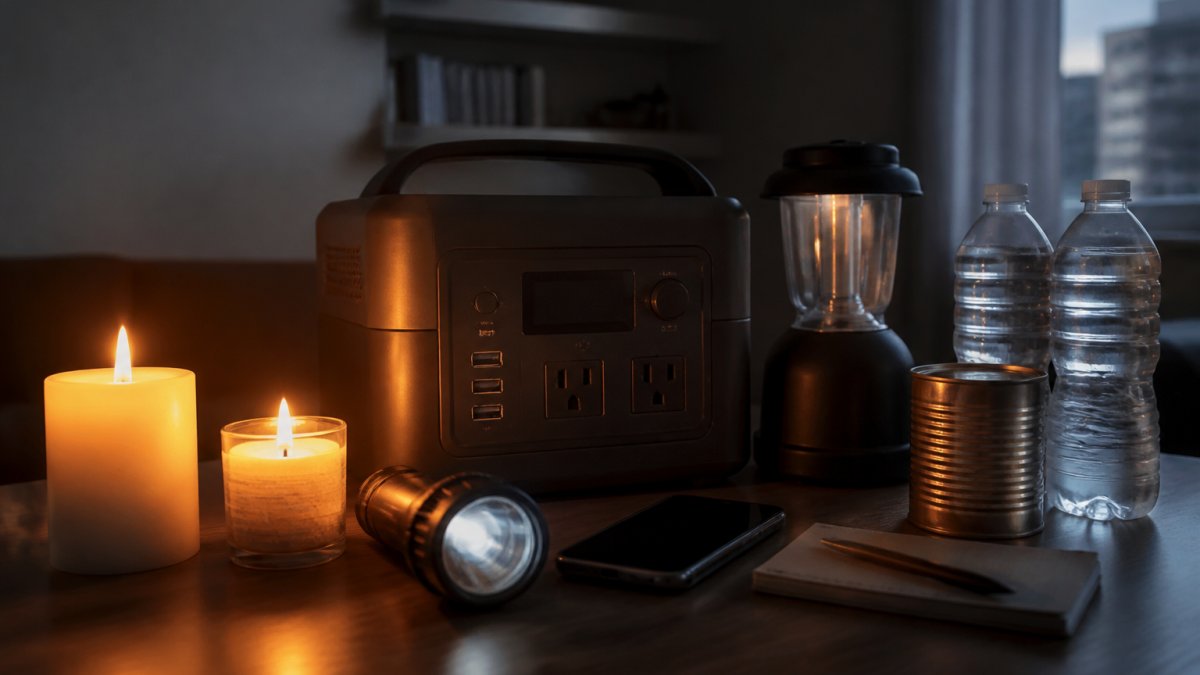
- Keep a flashlight near your bed and panel, since candles cause house fires and phone lights drain batteries.
- A closed refrigerator stays cold for about four hours, while a full freezer holds temperature for roughly 48 hours.
- Discard perishable food that has been above 4°C for more than two hours, and never taste food to test it.
- Never run a portable generator in a garage, basement, or attached shed, even with the door open.
- Call a licensed electrician when your neighbours have power and you don’t, or if a breaker trips again after resetting.
Table of Contents
- Your First Moves When the Lights Go Out
- A Power Outage Checklist for the First Hour
- How Long Does Food Last in a Power Outage?
- Generator Safety During a Power Outage
- Protecting Appliances and Electronics From Power Surges
- When to Call an Electrician for a Power Outage
- Book a Licensed Electrician for Outage Repairs
- Frequently Asked Questions
Your First Moves When the Lights Go Out
When the power fails, the first thing to do during an electrical power outage is check whether your neighbours still have lights. If their homes are dark too, the problem sits with the utility, not your wiring.
That single check tells you where to look next.
Here is the sequence that works:
- Check the street. Look at neighbouring homes through a window. Dark houses everywhere mean a wider outage.
- Check your panel. Look for a tripped main breaker before you call anyone.
- Report it. Contact your utility if the outage is area-wide.
- Protect your electronics. Unplug sensitive equipment while the power is down.
- Stay off the roads. Downed power lines are a life-threatening hazard, so keep your distance and call 911 if a line is touching a vehicle or person.
Keep a flashlight within reach of your bed and your main panel. Candles cause house fires, and a phone light drains the battery you may need later.
A Power Outage Checklist for the First Hour
A power outage checklist works best when it is tied to time. The actions that matter in the first five minutes are not the same as the ones that matter at hour four or on day two. Use this timeline to decide what to do and when, so you are not guessing under stress.
First 5 Minutes: Confirm and Secure
- Check whether neighbouring homes are dark to confirm an area-wide outage
- Look at your electrical panel for a tripped main breaker or circuit breaker
- Turn on a flashlight you keep near the panel or your bed, avoid candles
- Keep everyone inside and away from windows if you can see downed lines
First 30 Minutes: Report and Protect
- Report the outage to your utility and note the reference number
- Unplug sensitive electronics and turn off major appliances at the panel
- Leave one lamp switched on so you know when power returns
- Keep refrigerator and freezer doors closed from this point forward
- Check on vulnerable household members and confirm they have light, heat, and a charged phone
First 4 Hours: Conserve and Communicate
- Move food you plan to use soon to the front of the fridge so you open the door less
- Use a battery or hand-crank radio for updates if mobile networks are congested
- Send a short text rather than calling to keep lines free and save battery
- Confirm your family contact plan and a physical meeting point if phones fail
- Monitor indoor temperature and move to the lowest or highest floor as needed for heat or cold
Beyond 24 Hours: Sustain and Decide
- Assess food safety using the temperature thresholds in the food section below
- Rotate phone charging across devices and disable non-essential apps
- Check on neighbours who live alone or have mobility needs
- Decide whether to relocate if indoor temperatures become unsafe or a medical device cannot be powered
- Photograph any damage for insurance before you clean up
Write the first-five-minutes steps on a card and tape it inside your panel door. Under stress, a written sequence beats memory.
Checking Your Electrical Panel and Main Breaker
Start with the main breaker. If it sits in the middle or “off” position, the whole house has lost power at the panel, not at the street.
Watch out: never reset a breaker that trips again immediately. That points to a fault in your wiring, and repeated resets can start a fire. Leave it off and call a licensed electrician.
Reporting the Outage to Your Utility
Contact your utility as soon as you confirm the outage is not yours alone. Give them your address, the time the power went out, and whether you saw downed power lines nearby.
If a line is down, stay back at least the length of a bus and call 911. Treat every downed line as live.
Here is the timeline of what to do, and when, during the first hours of an outage.
| Timeframe | What to do |
|---|---|
| First 5 minutes | Check if neighbouring homes are dark; look at panel for tripped breaker |
| First 5 minutes | Turn on flashlight; keep everyone inside and away from windows |
| First 5 minutes | Call 911 if a line is touching a vehicle, person, or structure |
| First 30 minutes | Report outage to utility and note the reference number |
| First 30 minutes | Unplug sensitive electronics; leave one lamp switched on |
| First 30 minutes | Keep refrigerator and freezer doors closed from this point |
| First 4 hours | Use battery or hand-crank radio; send short texts rather than calling |
| Beyond 24 hours | Assess food safety; decide whether to relocate if temperatures become unsafe |
How Long Does Food Last in a Power Outage?
Food safety during an outage comes down to temperature and time, not guesswork. A closed refrigerator stays cold for about four hours. A full freezer holds its temperature for roughly 48 hours, or 24 hours if it is half full (Food and drinking water safety in an emergency). Keep doors closed to stretch that window, and group items together so cold air is shared.
The Temperature Thresholds That Matter
- Refrigerator at or below 4°C: safe to keep and use
- Above 4°C for more than two hours: discard perishable items
- Freezer still showing ice crystals: safe to refreeze or cook
- Freezer thawed but still cold: cook it now rather than refreezing
Use a fridge thermometer rather than your hand. If you do not own one, add it to your emergency kit, it is the single most useful tool for this decision.
How to Assess Each Category
- Meat, poultry, fish, and eggs: discard if above 4°C for more than two hours. Do not rely on smell.
- Milk, soft cheese, and opened dairy: discard on the same two-hour rule.
- Hard cheese, butter, and unopened juice: often survive longer; check for warmth and off texture.
- Cooked leftovers and prepared meals: treat as perishable and discard on the two-hour rule.
- Fresh produce: whole fruits and vegetables usually tolerate warmth better than cut items; discard anything slimy or moldy.
When to Discard Rather Than Risk It
Never taste food to test it. When in doubt, throw it out. Discard anything that has been above 4°C for more than two hours, anything with an odd smell, colour, or texture, and anything that thawed and sat warm for an extended period. If a power outage lasts more than a day and your fridge has clearly warmed, plan to replace perishables rather than gamble on them.
Do not refreeze thawed food that sat above 4°C. Refreezing does not make it safe, and it can mask spoilage.
Keeping Cold Air Where It Belongs
Open the refrigerator and freezer as little as possible. Know what you want before you open the door, and take items out in one motion. If the outage is expected to be long, move items you plan to use first to the front so you are not searching. A full freezer holds cold longer than a half-full one, so fill empty space with containers of water before a forecast storm.
Generator Safety During a Power Outage
Generator safety during a power outage comes down to one rule: the exhaust goes outside. Portable generators produce carbon monoxide, an odourless gas that kills quietly.
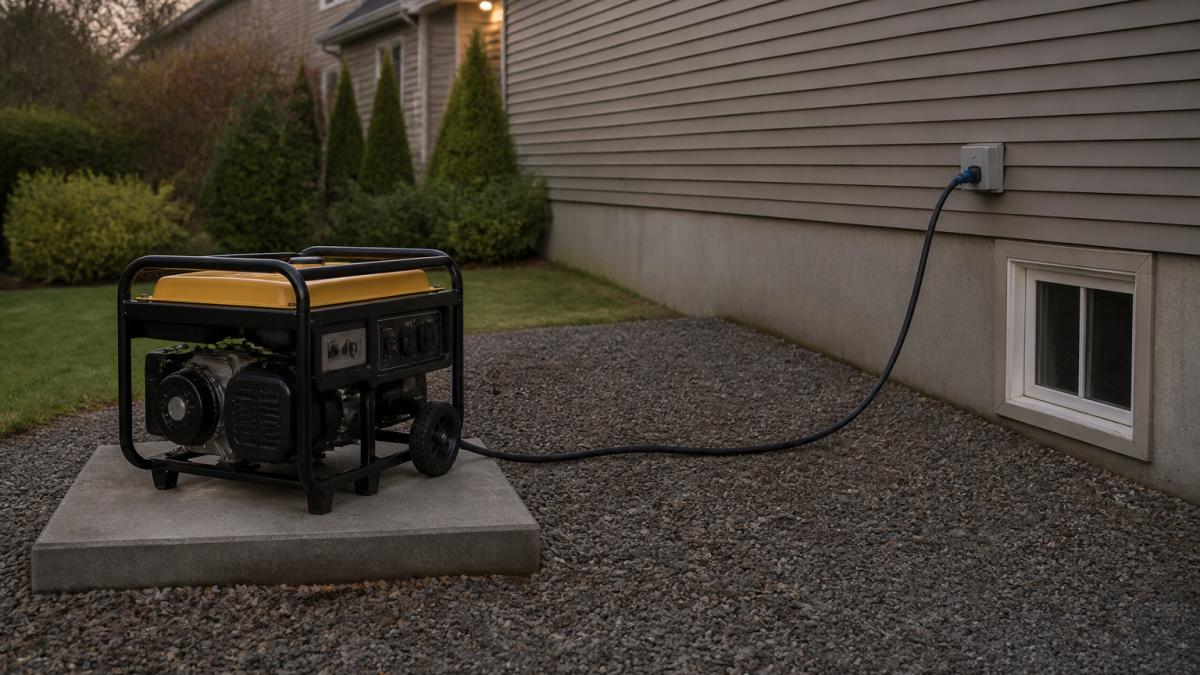
Place the unit outdoors, well away from windows and doors, and point the exhaust away from the house. Give it space to breathe.
Watch out: a generator plugged into a wall outlet can energize lines the utility thinks are dead.
Protecting Appliances and Electronics From Power Surges
A power surge is a sudden spike in voltage that can fry circuit boards in appliances and electronics. When electricity returns after an outage, that surge can hit everything plugged in at once.
Unplug sensitive electronics before power comes back:
- Computers and routers
- Televisions and game consoles
- Microwaves and coffee makers
- Phone chargers and power banks
Turn off major appliances at the panel or unplug them. If outages are common on your street, a whole-house surge protector defends your panel and everything downstream.
When to Call an Electrician for a Power Outage
Call a licensed electrician for a power outage when your neighbours have power and you don’t. That pattern means the fault is inside your home, and it is not something to troubleshoot alone.
Call right away if you notice:
- A burning smell or scorch marks near the panel
- A breaker that trips again after resetting
- Buzzing, crackling, or sparking from outlets
- Partial power, where some rooms work and others don’t
- Damage from a surge, storm, or fallen tree
If you rent, call your landlord first. If you own the home, find an emergency electrician who can reach you fast, and check what emergency electrical repair coverage insurance includes before you authorize work so you know what your policy handles.
Book a Licensed Electrician for Outage Repairs
A power outage that turns out to be a wiring fault needs a licensed, insured, and bonded electrician, not a handyman.
We handle residential and commercial repairs, panel work, and surge protection, with clear communication on arrival times. Customers tell us they appreciate that we keep them updated on our ETA.
If the outage is utility-side, wait for restoration. If it’s yours, don’t wait.
Frequently Asked Questions
What should I do first when the power goes out?
Check whether your neighbours still have power. If their lights are on, the problem is likely inside your home: inspect your electrical panel for a tripped main breaker. If the whole area is dark, report the outage to your utility and unplug sensitive electronics to protect them from a power surge when electricity returns. Keep your refrigerator and freezer doors closed and use a flashlight rather than candles to avoid a fire risk.
How long does food last in a power outage?
A closed refrigerator keeps food safe for about four hours, and a full freezer holds its temperature for roughly 48 hours, or 24 hours if it is half full. After that window, discard perishable items that have been above 4°C for more than two hours. Keep doors closed as much as possible and use a thermometer to confirm temperatures before you cook or refreeze anything.
Is it safe to run a generator during a power outage?
Only if it is placed outdoors, at least several metres from windows, doors, and vents, and never in a garage or enclosed space. Generator exhaust contains carbon monoxide, which is odourless and can build up quickly indoors. Use heavy-duty extension cords rated for the load, let the generator cool before refuelling, and have a licensed electrician install a transfer switch if you want to connect it to your home’s wiring safely.
When should I call an electrician during a power outage?
Call a licensed electrician if your neighbours have power but you do not, if your main breaker will not reset, if you smell burning or see scorch marks at the panel, or if you notice damaged wiring or a downed line on your property. Also call if sensitive equipment or a medical device needs a safe backup solution. A professional can diagnose the fault and confirm your system is safe before power is restored.
When the lights go out and the cause sits inside your own panel, guessing costs time and money. Bighorn Electric brings licensed, insured, and bonded electricians to your door, with a 48-hour on-site response guarantee for urgent issues and clear communication on every ETA. Get started with Bighorn Electric and get your power back safely, or contact our team to book residential service today.


0 Comments